
Hydrogen from sunlight and air
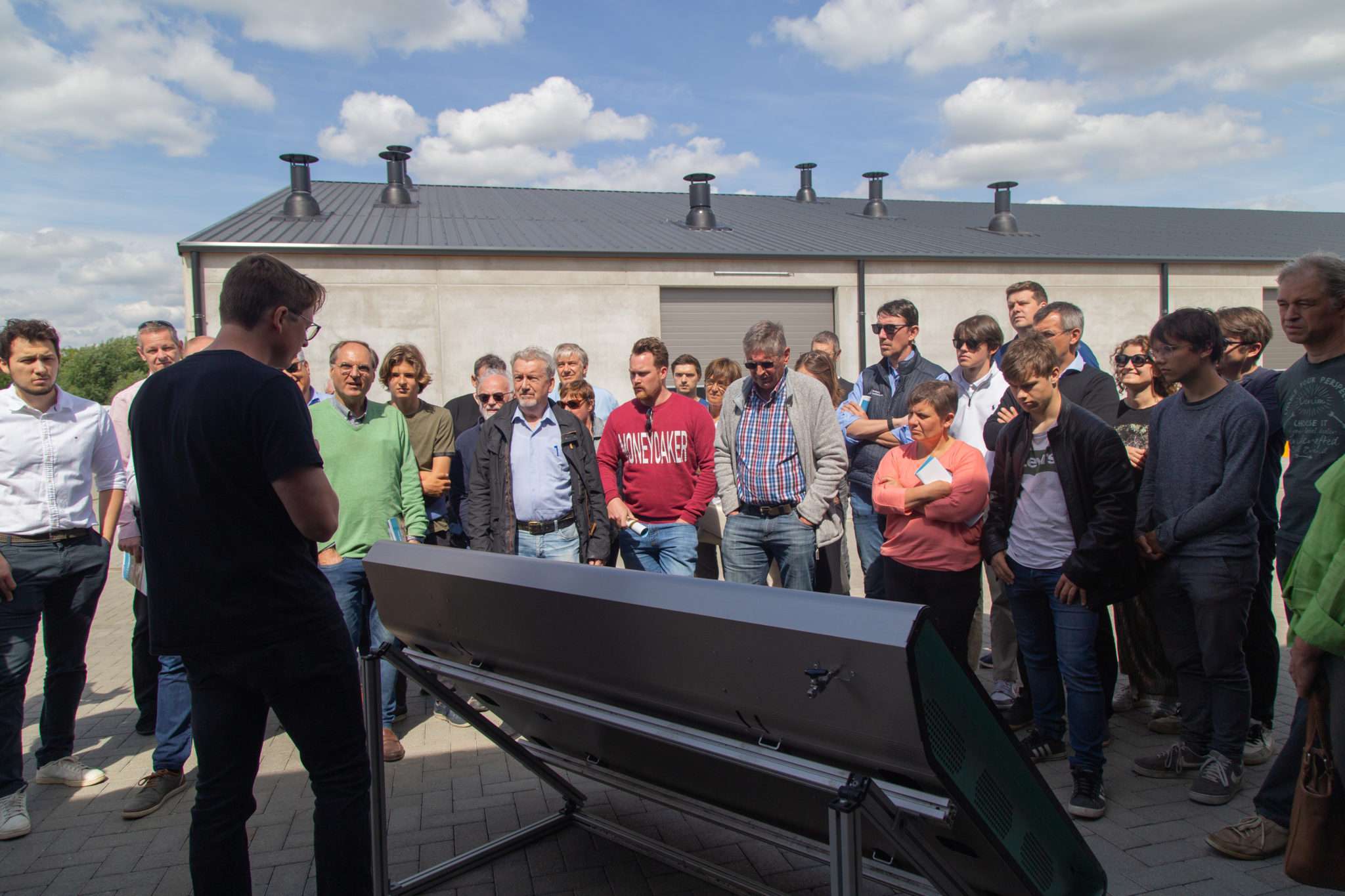
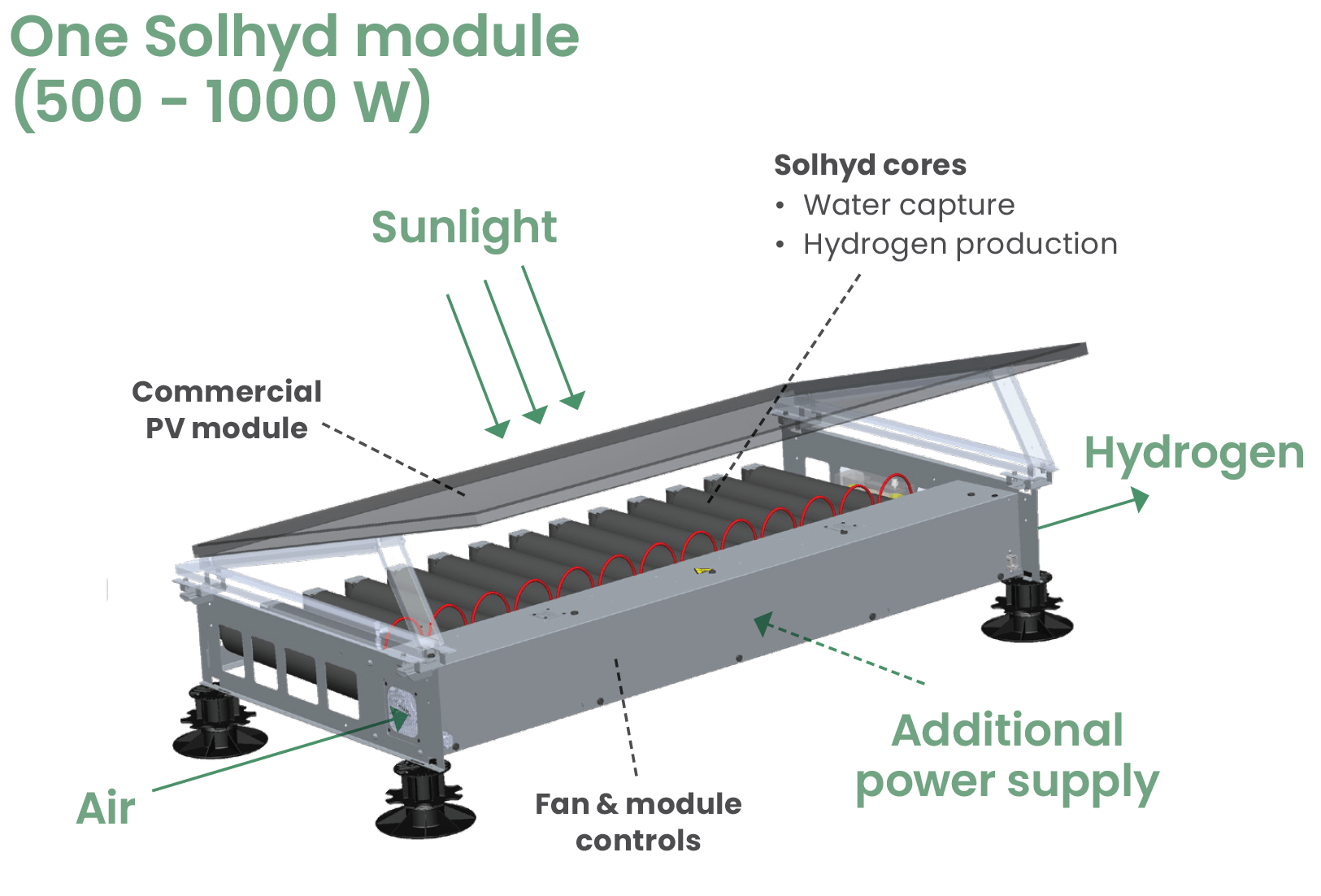
Solhyd modules sit under ordinary solar panels, pull moisture from the air and split it into pure green hydrogen. No water supply, no cooling, no high-voltage gear.
Illustrative model: one 700 W module on a clear June day in Leuven, about 55 kWh per kg of H₂. Real yields depend on site, season and configuration.
Renewable hydrogen for anyone, anywhere
Born at KU Leuven more than ten years ago, Solhyd turns the solar park itself into the electrolyser. Each module plugs into commercial photovoltaics and runs on its own whenever the sun is up.
What we left out
A classic electrolyser plant needs a lot of balance of plant around the stack. Our cores capture and buffer moisture from the air themselves, so most of it simply disappears.
- Water purificationair is the feedstock
- Cooling systemsnot needed
- High-voltage transformersdirect PV feed
- Gas-liquid separationnot needed
- Critical raw materialsno precious metals
One module, three scales
Modules run in parallel and grow with demand, from a single on-site pilot to gigawatt projects.
SHP-Commercial
- On-site hydrogen production
- Metallurgy, food, electronics, semiconductors
SHP-Utility
- Off-site production in solar parks
- Delivery via pipeline or tube trailers
- Chemicals, mobility, electronics
SHP-Industrial
- Large-scale project development
- Regions with abundant renewables
- Methanol, ammonia, eSAF, steel
The first hydrogen solar park
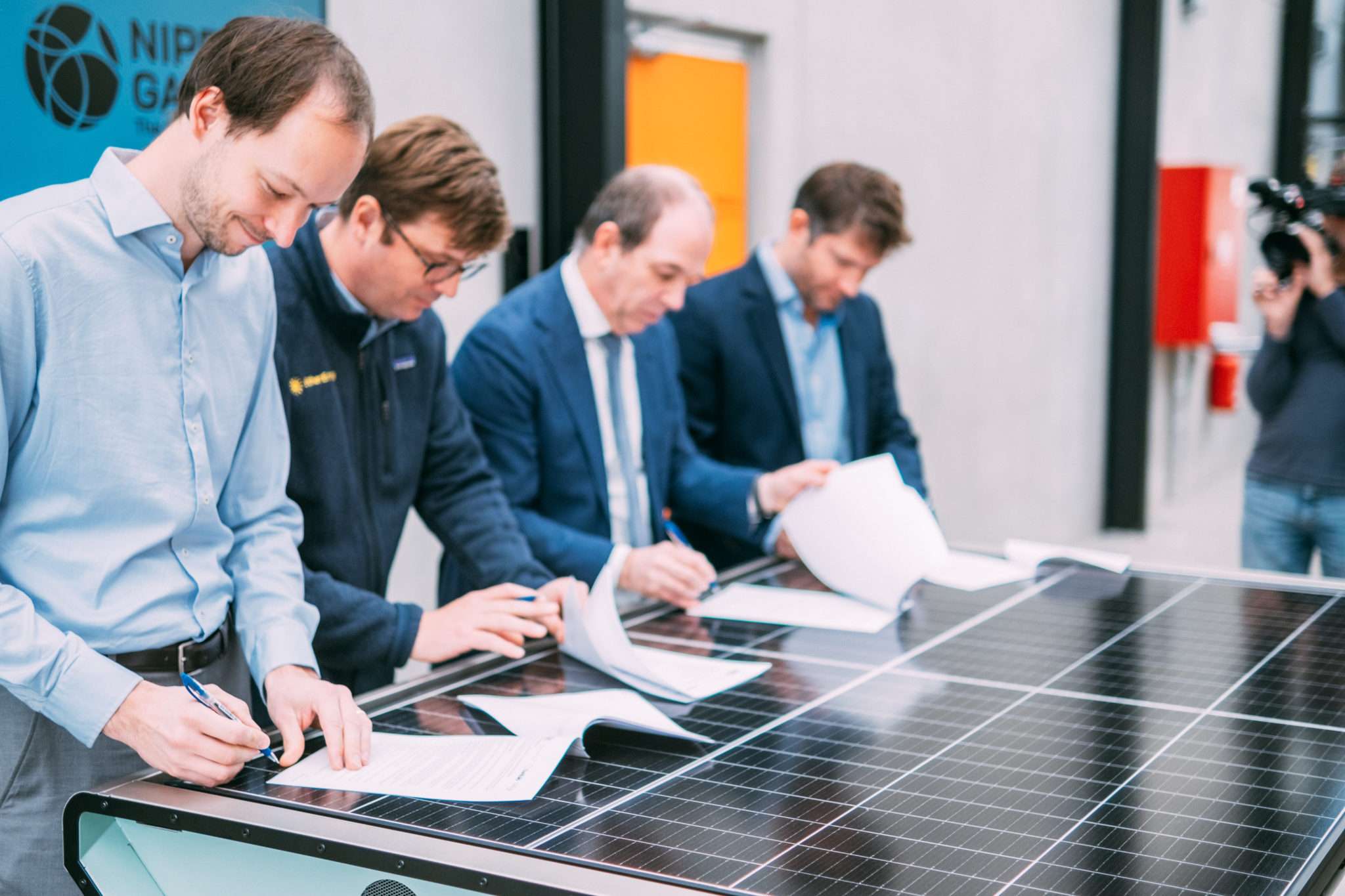
In November 2025 Solhyd, Nippon Gases, Ether Energy and SunBuild signed up to build the world's first solar park with hydrogen-producing PV modules, on a site in Wallonia. It is the first demonstration of the technology at a commercially relevant scale.
- Solar park
- 2 MW
- Solhyd modules
- 50 kW
- Location
- Wallonia, BE
- Planned
- 2026
€2.5 million grant plus up to €5 million in equity to industrialise and scale the technology (March 2026).
CEO Jan Rongé named Rising Star in Clean Energy Innovation, Bangkok, December 2025.
Award at the World Hydrogen Summit 2025 in Rotterdam, alongside the Gasworld recognition the same year.